Skip to content
-
Subscribe to our newsletter & never miss our best posts. Subscribe Now!
Tech Verge
Tech Verge
  • Home
  • About Us
  • Contact Us
  • Privacy Policy
  • Tech
  • Home
  • About Us
  • Contact Us
  • Privacy Policy
  • Tech
Close

Search

  • https://www.facebook.com/
  • https://twitter.com/
  • https://t.me/
  • https://www.instagram.com/
  • https://youtube.com/
Subscribe
Tech Verge
Tech Verge
  • Home
  • About Us
  • Contact Us
  • Privacy Policy
  • Tech
  • Home
  • About Us
  • Contact Us
  • Privacy Policy
  • Tech
Close

Search

  • https://www.facebook.com/
  • https://twitter.com/
  • https://t.me/
  • https://www.instagram.com/
  • https://youtube.com/
Subscribe
Tech

Multi-Agent Orchestration: How Your Business Can Manage a Digital AI Workforce

By workpag953@gmail.com
March 30, 2026 2 Min Read
0

The Workforce of 2027: Not People vs. AI, but Teams of Agents

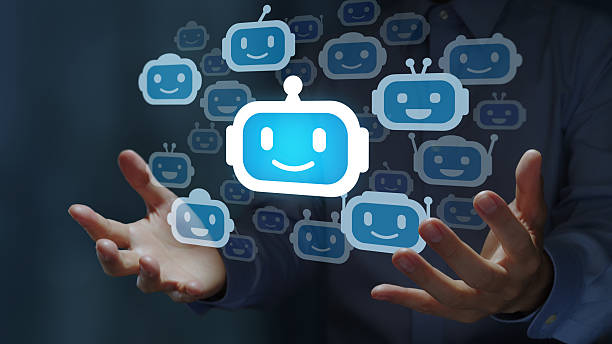
In 2024 and 2025, the focus was on “The Assistant”—a single AI that helped you write or code. In 2026, the paradigm has shifted to Multi-Agent Systems (MAS). Businesses are no longer deploying a single LLM; they are deploying “swarms” of specialized agents that talk to each other to solve complex problems.

The Hierarchy of a Digital Workforce

A successful MAS is structured much like a traditional corporate department. To manage this digital workforce, we use an architecture known as Orchestration.

  1. The Manager Agent: This agent interprets the high-level goal from the human user. It breaks the goal into sub-tasks and assigns them to specialized agents.
  2. The Worker Agents: Specialized units. One might be an “SEO Keyword Expert,” another a “Content Drafter,” and a third a “Fact-Checker.”
  3. The Critic Agent: This is the secret to 2026 AI reliability. The Critic Agent’s only job is to find flaws in the Worker Agent’s output. If the quality isn’t met, it sends the task back for a “redo” before the human ever sees it.

The Manager’s New Skill: Orchestration Logic

For the entrepreneur, the most valuable skill is no longer technical execution, but logic design. You must define the “rules of engagement” for these agents. How do they handle a conflict in data? When should they “hand off” a task back to a human? Managing 50 agents is vastly different from managing 50 people, but the goal remains the same: maximizing throughput while maintaining brand voice and accuracy.

Operational Efficiency and Scaling

The beauty of MAS is scalability. Once you have a “squad” of agents that can successfully research and write a tech article for a site like techfestival.shop, you can clone that squad instantly. In 2026, the size of your company is no longer measured by your headcount, but by the complexity of the agentic workflows you can successfully orchestrate.


Author

workpag953@gmail.com

Follow Me
Other Articles
Previous

Beyond the Prompt: The Future of Human-AI Collaboration in Creative Industries

Next

Vertical Video First: Mastering Cinematic Storytelling for 9:16 Social Platforms

No Comment! Be the first one.

Leave a Reply Cancel reply

Your email address will not be published. Required fields are marked *

Recent Posts

  • The Rise of Agentic AI: Moving from “Chatting” to “Doing” in 2026
  • Cloud 3.0 Explained: Why the Future of Data is Hybrid, Private, and Sovereign
  • Vertical Video First: Mastering Cinematic Storytelling for 9:16 Social Platforms
  • Multi-Agent Orchestration: How Your Business Can Manage a Digital AI Workforce
  • Beyond the Prompt: The Future of Human-AI Collaboration in Creative Industries

Recent Comments

No comments to show.

Archives

  • May 2026
  • April 2026
  • March 2026
  • February 2026
  • January 2026
  • December 2025
  • October 2025
  • September 2025
  • August 2025
  • July 2025
  • June 2025
  • May 2025
  • April 2025
  • March 2025
  • February 2025
  • January 2025
  • December 2024
  • November 2024
  • October 2024
  • September 2024
  • August 2024
  • July 2024
  • June 2024
  • May 2024

Categories

  • Tech
Copyright 2026 — Tech Verge. All rights reserved. Blogsy WordPress Theme