Skip to content
-
Subscribe to our newsletter & never miss our best posts. Subscribe Now!
Tech Verge
Tech Verge
  • Home
  • About Us
  • Contact Us
  • Privacy Policy
  • Tech
  • Home
  • About Us
  • Contact Us
  • Privacy Policy
  • Tech
Close

Search

  • https://www.facebook.com/
  • https://twitter.com/
  • https://t.me/
  • https://www.instagram.com/
  • https://youtube.com/
Subscribe
Tech Verge
Tech Verge
  • Home
  • About Us
  • Contact Us
  • Privacy Policy
  • Tech
  • Home
  • About Us
  • Contact Us
  • Privacy Policy
  • Tech
Close

Search

  • https://www.facebook.com/
  • https://twitter.com/
  • https://t.me/
  • https://www.instagram.com/
  • https://youtube.com/
Subscribe
Tech

The Rise of Agentic AI: Moving from “Chatting” to “Doing” in 2026

By workpag953@gmail.com
May 1, 2026 2 Min Read
0

The Death of the Chatbot

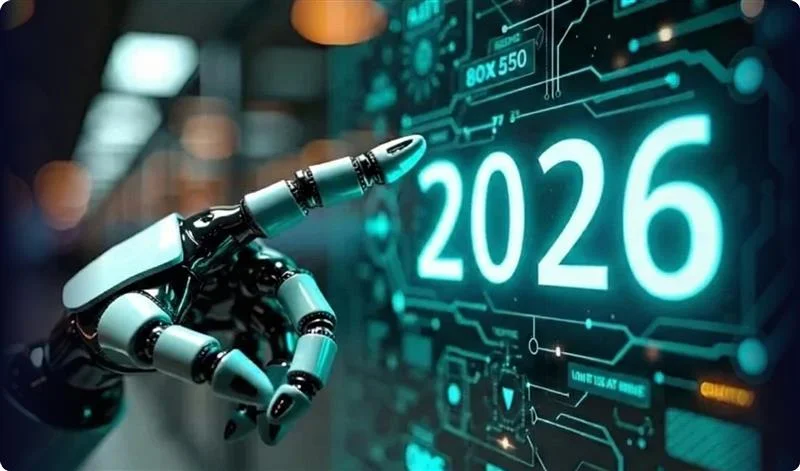
For the past few years, the world has been enamored with Large Language Models (LLMs) that talk. We’ve used them to write emails, summarize PDFs, and generate code. But in 2026, the industry is undergoing a fundamental shift. We are moving away from “Generative AI”—which simply produces content—and toward Agentic AI, which executes workflows.

An AI Agent is not a chatbot. While a chatbot waits for your prompt to reply, an Agent is given a goal and the tools to achieve it. If you tell a chatbot, “Plan a trip,” it gives you a list. If you tell an Agent, “Plan a trip,” it accesses your calendar, checks your budget, books the flights, and handles the visa application.

The Architecture of Agency

Agentic AI relies on three core pillars: Perception, Reasoning, and Action.

  1. Perception: The ability to monitor environments (like a digital workspace or a price-tracking tool).
  2. Reasoning: Breaking a large goal into sub-tasks (e.g., “To buy a car, I first need to compare insurance rates”).
  3. Action: The capability to use APIs, browse the web, and interact with software as a human would.

Why 2026 is the Tipping Point

The bottleneck for AI agents has always been “hallucinations”—errors that cause the AI to go off-track. However, with the integration of Multi-Agent Systems (MAS), agents now “check” each other’s work. One agent writes the code, another reviews it, and a third tests it. This self-correcting loop has brought the reliability of autonomous agents to enterprise-grade levels.

The Economic Impact

The shift to Agentic AI represents a move toward the Intent Economy. In this world, the primary skill for workers is no longer operating software, but “Orchestration.” For developers and creators, this means managing a fleet of digital workers. It’s an era where “Human-in-the-Loop” management becomes the most valuable skill in the tech niche.


Author

workpag953@gmail.com

Follow Me
Other Articles
Previous

Cloud 3.0 Explained: Why the Future of Data is Hybrid, Private, and Sovereign

No Comment! Be the first one.

Leave a Reply Cancel reply

Your email address will not be published. Required fields are marked *

Recent Posts

  • The Rise of Agentic AI: Moving from “Chatting” to “Doing” in 2026
  • Cloud 3.0 Explained: Why the Future of Data is Hybrid, Private, and Sovereign
  • Vertical Video First: Mastering Cinematic Storytelling for 9:16 Social Platforms
  • Multi-Agent Orchestration: How Your Business Can Manage a Digital AI Workforce
  • Beyond the Prompt: The Future of Human-AI Collaboration in Creative Industries

Recent Comments

No comments to show.

Archives

  • May 2026
  • April 2026
  • March 2026
  • February 2026
  • January 2026
  • December 2025
  • October 2025
  • September 2025
  • August 2025
  • July 2025
  • June 2025
  • May 2025
  • April 2025
  • March 2025
  • February 2025
  • January 2025
  • December 2024
  • November 2024
  • October 2024
  • September 2024
  • August 2024
  • July 2024
  • June 2024
  • May 2024

Categories

  • Tech
Copyright 2026 — Tech Verge. All rights reserved. Blogsy WordPress Theme